

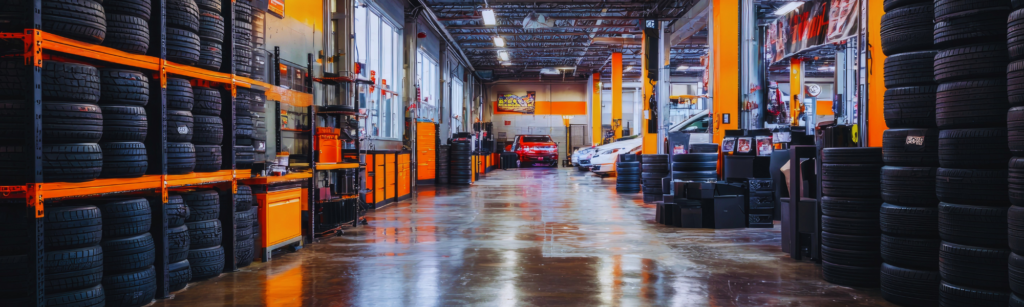
The cleanest tire shops aren’t those with the most space—they’re the ones that treat tire removal as a core piece of operational infrastructure. Achieving and maintaining a spotless shop floor is a deliberate choice rooted in operational discipline. It requires integrating tire removal and floor management into daily workflows, supported by reliable systems that streamline tire collection and recycling. This article highlights how disciplined tire removal practices create safer, more efficient, and customer-friendly tire shops.
The Dangers of a Crowded Tire Shop Floor
A crowded tire shop floor poses significant dangers, including increased risk of trips, falls, and even fire hazards due to obstructed pathways and accumulated tires. These hazards not only threaten employee safety but also disrupt workflow and reduce overall efficiency. Having effective systems in place are essential because they treat tire removal as a fundamental operational pillar, providing predictable and reliable service that prevents tire buildup before it becomes a hazard.
Shops must take the necessary steps to maintain clear, safe floors that support both safety protocols and operational efficiency. Doing so reinforces a comprehensive and disciplined approach to shop floor management.
Embedding Tire Removal into Your Operation
Clean shop floors are the direct result of a systematic approach where tire removal is embedded into the shop’s operational DNA. This means scheduled tire pickups, predictable collection cadences, and seamless integration with daily tasks. Shops that succeed treat tire removal as essential infrastructure—just like inventory management or customer service—ensuring clutter never accumulates and safety risks are minimized.
Operational discipline means that tire lifecycle management is a core responsibility. Scheduled pickups prevent tire buildup, while operational integration allows staff to focus on their primary roles without distraction. Traxion’s platform supports this discipline by coordinating tire collection schedules on a basis that accommodates your shop, ensuring timely removals. This infrastructure approach keeps floors clear and workflows smooth, directly impacting safety and efficiency.
Traxion: Tire Removal as Infrastructure
Countless businesses throughout the Tennessee area and beyond are partnering with Traxion for their tire collection needs. Traxion transforms tire removal from a reactive chore into a proactive operational system. By offering scheduled pickups — tailored to shop volume and integrating seamlessly with daily workflows — Traxion eliminates clutter and reduces workplace hazards. Our platform fosters communication with local vendors, ensuring reliability and preventing overflow.This operational discipline supports a cleaner, safer environment that enhances both employee well-being and customer experience.
Environmental and Safety Benefits of Disciplined Tire Removal
Implementing a disciplined tire removal system does more than keep shop floors clear. It also supports environmental sustainability by facilitating tire recycling. With Traxion, your collected tires move directly into the Traxion Tire LifeCycle Network, where they’re graded, processed, and directed toward productive applications like tire-derived fuel and recycled material — closing the loop on what would otherwise become waste. This reduces landfill waste, lowers greenhouse gas emissions, and conserves resources.
A proper tire removal system also mitigates workplace hazards by preventing tire accumulation that can increase fire risk. Tire fires are notoriously difficult to extinguish, burning for days or weeks and releasing a toxic mix of chemicals into the surrounding air, soil, and water. The environmental damage from a single large-scale tire fire can affect entire communities — and the liability doesn’t stop when the flames do.
|
Environmental Benefit
|
Description
|
Impact Level
|
|---|---|---|
|
Reduction of Landfill Waste
|
Diverts used tires from landfills
|
High
|
|
Lower Greenhouse Gas Emissions
|
Reduces emissions compared to disposal
|
High
|
|
Conservation of Resources
|
Decreases demand for new tire production
|
Medium
|
This operational choice directly contributes to a safer, more compliant, and environmentally responsible tire shop.
Best Practices for Managing Space and Compliance Risks on the Shop Floor
Tires take up a significant amount of space, and when left unmanaged, they can quickly overcrowd the shop floor, creating numerous challenges for employees and compliance risks for the business. Overcrowded floors hinder movement, increase the likelihood of accidents, and complicate emergency evacuations. Moreover, they can lead to violations of safety regulations, resulting in fines or operational shutdowns.
To effectively manage space and mitigate these risks, shops should implement a structured tire removal system that integrates seamlessly into daily operations. Beyond tire collection, this also includes training employees on proper tire handling and storage to maintain clear pathways and uphold shop hygiene standards.
Traxion’s system plays a crucial role in supporting these best practices by providing predictable and integrated tire removal services. This allows staff to maintain a safe and organized workspace without disruption, reducing clutter and minimizing compliance risks. Regular audits and safety training further reinforce adherence to regulations and promote continuous improvement in floor management.
Traxion: Your Tire Collection Partner
Clean tire shop floors are the deliberate result of operational discipline that treats tire removal as essential infrastructure. The shops that get this right adopt this mindset and, as a result, they run safer, absorb volume spikes without breaking down, and operate with the kind of environmental accountability that holds up under scrutiny. Partnering with Traxion is how that standard gets built in — and stays reliable.
Looking to add a reliable tire removal system to your operation? Get started here: Book Your First Collection Quote.